Scope
Over seven years, my role grew from hands-on visual and motion design into broader responsibility for visual systems, creative direction, scalable production and digital experiences. As teams, leadership and vendors changed, I also became a source of continuity: someone who could turn ambiguous requests into workable approaches, connect design decisions to implementation, and help teams move forward when the path was unclear.
What the role covers
Visual systems & standards · Creative direction · Iconography & illustration · Motion design & animation · Digital & interactive · Templates & asset libraries · Automation & implementation · Designer guidance & evaluation · Ambiguity & unconventional problem solving
Selected work
Three examples of the kinds of problems I am often brought into: evolving visual systems, technical constraints and repeated work that needs a more scalable solution.
01 · Visual systems
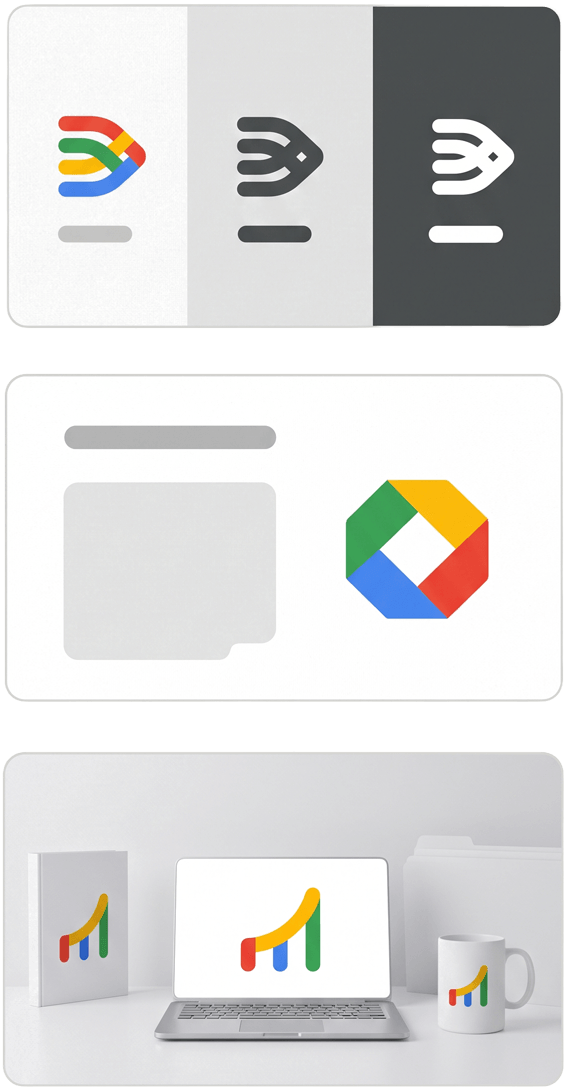
From one rebrand to a connected brand system
The original brief was to create a fresh identity for GBOedu and make a clear break from the existing Mastery brand. I had already developed and presented several directions when a broader organizational change introduced a new parent structure above GBOedu and several other groups.
That changed the problem, not just the deliverables. I paused the child identity and shifted the work upstream, defining the parent system first so the two brands would not evolve independently. Once that foundation was established, I developed the guidelines and rollout materials, then returned to GBOedu and evolved the earlier work within the new structure. The value was in recognizing the hierarchy had changed and reorganizing the work around it without discarding useful progress.
02 · Digital systems + implementation
When the requested feature wasn’t the real problem
A cross-functional team asked whether several third-party websites could be embedded into a single page within the corporate Google Sites environment. After researching the platform and its constraints, I found that the requested implementation was not realistically possible.
Instead of treating that as the end of the request, I stepped back and clarified the underlying need. The team did not actually need embedded websites, they needed one reliable place to surface information from several sources. I reframed the problem, proposed an automated data layer, and carried the idea far enough across design and development to make it real. The first implementation succeeded, and the same approach was later reused for events, calendars, resource content and other structured experiences.
03 · Scale + production
Turning recurring requests into reusable systems
Across the programs I supported, similar requests kept returning in different forms. They often appeared to be separate design tasks, but underneath them were the same layout decisions, assets, standards and production questions.
I treated that repetition as a systems problem. Instead of solving the same thing again each time, I identified what could be standardized, automated or made reusable. Repeated layouts became templates, shared visual decisions became libraries and components, and recurring production questions became clearer standards. The result was less dependency on individual designers, faster starting points for teams, and more consistency without requiring everyone to relearn the system from scratch.
Broader role
Beyond the selected cases
The three examples above represent only part of the role. My day-to-day scope also includes creative direction, designer guidance and evaluation, hiring support, interface and interaction design, stakeholder consultation, production oversight, implementation, and helping teams work through problems that do not fit neatly into a design brief.
Selected visual work
Alongside that broader responsibility, visual design remains an important part of my practice. Below is a selection of work across iconography, illustration, motion, presentation systems, information design and digital experiences.





Note
Some examples may be simplified, reconstructed or shown with placeholder content to protect confidential internal work.